

The Future Bank starts here...
Young & Emerging Adults (18–32) are underserved in a digital world—both technologically and experientially. Banks and fintechs often forget this cohort is their future pipeline for home loans and investments; loyalty isn’t “earned” at mortgage time, it’s built well before. This report explores satisfaction levels, trust, life stages, emotional drivers, product design, how they want to be rewarded (including loyalty programs), and how organisations can better serve the next generation of banking customers. It also examines important cultural considerations for Māori and Pasifika in banking.
Alongside these insights, the paper features local and global case studies and includes a deep dive into enabling technologies that will be crucial for serving this age group—such as AI, payment technology, open banking, digital wallets, and digital identity. Off the back of the research, I’ve co-designed a Trust Framework and an Execution Model to translate insight into delivery, complemented by personas and co-designed product and service value propositions.
For any questions, reach out to Lance at lance@shapeconsulting.nz or on LinkedIn
View Now

July 2020
Fintech Market Opportunities in SE Asia
Southeast Asia has immense potential for Fintech investments, given the population base and the overall digital maturity of the region.
View Now

June 2020
FinTech Future
TRADE OPPORTUNITIES FOR NEW ZEALAND AND THE UNITED KINGDOM
FinTechNZ and The Department for International Trade (DIT) supported a delegation to travel to the UK in September 2019, assisting New Zealand and Australian fintech companies to explore trade and investment opportunities in the UK. The delegates attended the Lendit conference and other curated sessions with investors, corporates, fellow fintech companies, regulators and service providers. Delegates emerged from the week with a positive outlook on the opportunities presented by the UK as a market, and an enhanced network to drive trade opportunities in both directions. Delegates also developed commercial relationships (and sales prospects) during the week. This backdrop, along with the UK’s departure from the EU, and each Government’s interest in pursuing a free trade agreement (FTA) following Brexit, has prompted this report.
View Now
February 2020
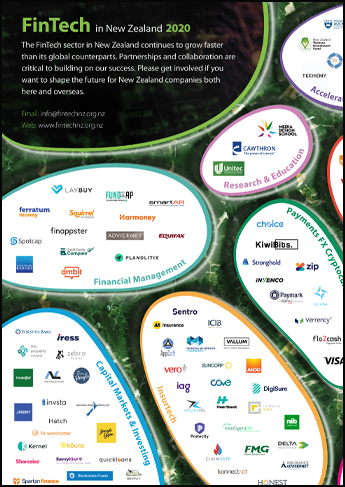
Who’s who in New Zealand’s every changing financial technology landscape v1.2
New Zealand’s FinTech sector continues to be the fastest growing contributor of our Technology Industry. Connection and collaboration are critical to building on our success in this time of immense change. Please get involved if you want to help shape the future for New Zealand companies both here and overseas.
View Now
December 2019
The Global FinTech Index 2020
The Findexable Global FinTech Index City Rankings report publishes for the first time the results calculated by our Index algorithm which ranks the FinTech ecosystems of more than
230 Cities
65 Countries
7000 FinTech companies
View Now
October 2019
FinTechNZ Regulatory Roundtable Discussion Paper
This FinTechNZ discussion paper provides insights from the FinTechNZ Regulatory Roundtable session held in Auckland in September 2019. Included are comments from the Minister of Commerce and Consumer Affairs and key observations from group discussions between senior Government, regulatory and corporate representatives.
View Now
August 2019
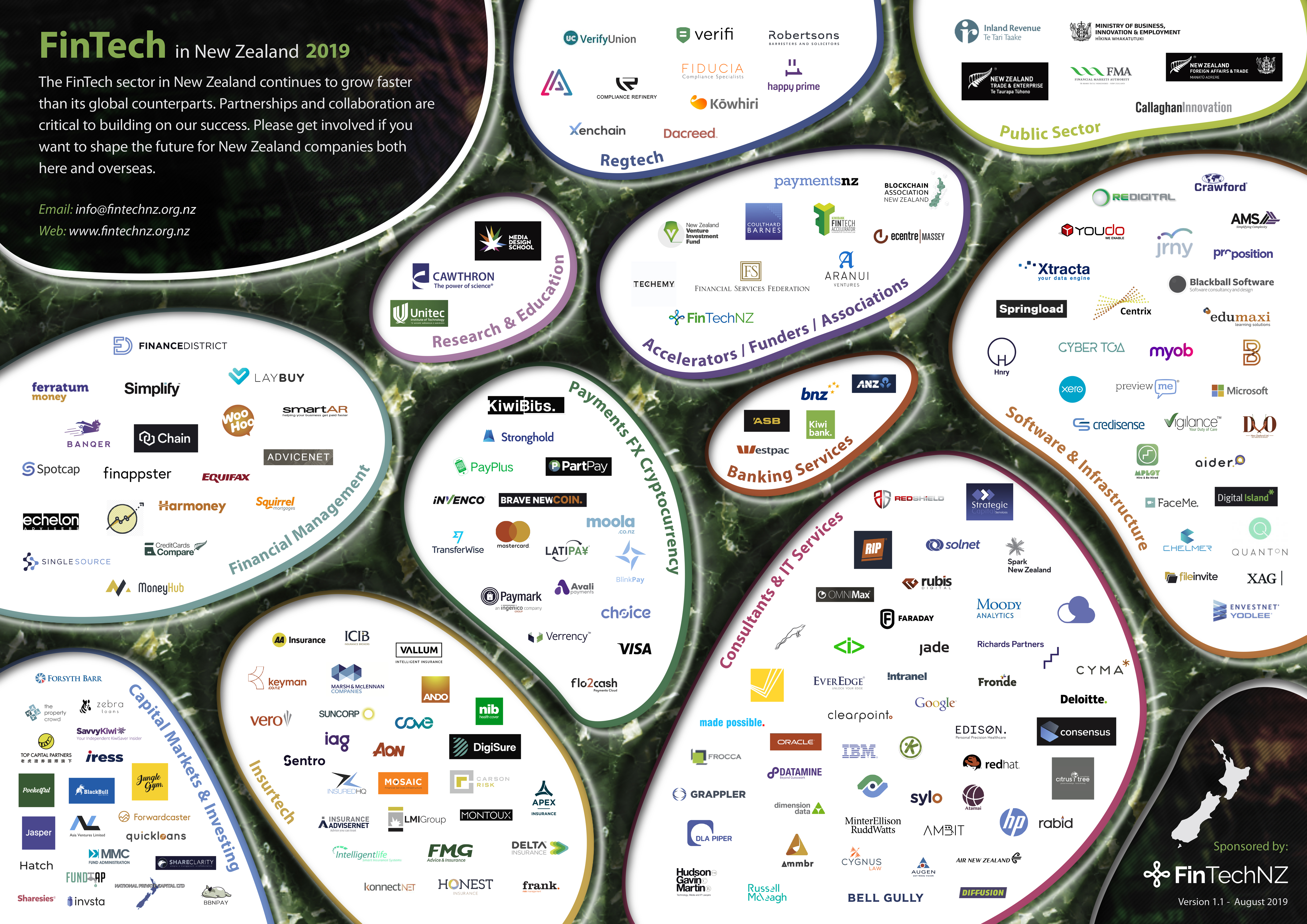
Explore New Zealand’s financial technology ecosystem v1.1
The FinTech sector in New Zealand continues to grow faster than its global counterparts. Partnerships and collaboration are critical to building on our success. Please get involved if you want to help shape the future for New Zealand companies both here and overseas.
View Now
May 2019
Regulation of FinTech: Jurisdiction Analysis
This Report has been produced for Treasury by Jeremy Muir of MinterEllisonRuddWatts. The report covers the following – key issues associated with the regulation of FinTech; approaches that international regulators have taken to respond to those issues and features of the New Zealand context that would impact on how various responses might translate into New Zealand’s regulatory system.
View Now
November 2018
UK FinTech Onboarding Guidelines
These guidelines have been developed by the banking industry in the United Kingdom to provide guidance to fintechs on the terms and approach used by many financial institutions for collaboration and commercialisation of new fintech propositions. The intention is to allow fintechs to better prepare for and confirm that they are ready to engage with a large financial institutions. It outlines the commercial considerations and the necessary checks and controls that need to be satisfied to meet business and regulatory demands.
View Now